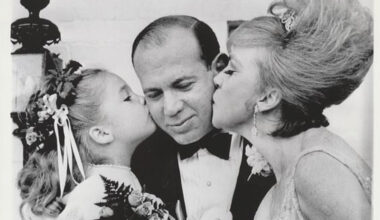
Basic Information
| Field | Details |
|---|---|
| Name | Philippa Dunne |
| Occupation | Economic analyst, editor, researcher |
| Current Role | Co-editor, TLR Analytics (since the late 1990s) |
| Areas of Expertise | Labor markets, employment recoveries, public data, financial insecurity, sales tax trends |
| Known Collaborator | Doug Henwood |
| Parents | Philip Ives Dunne (screenwriter, director, producer); Amanda Duff (actress, photographer) |
| Siblings | Miranda Dunne; Jessica Dunne (artist and printmaker) |
| Notable Ancestors | Finley Peter Dunne (humorist, “Mr. Dooley”); Margaret Ives Abbott (1900 Olympic golf champion) |
| Public Presence | Economic commentary, essays, interviews, and social media posts on labor statistics |
| Residence | New York City area (reported) |
Origins and Family Legacy
Philippa Dunne was born into a household where stories mattered and data, in their own way, did too. Her father, Philip Ives Dunne (1908–1992), helped define classic Hollywood narrative craft across the mid-20th century, earning Academy Award nominations for work including How Green Was My Valley (1941) and writing or directing more than thirty films. He was equally emphatic beyond the camera, standing against the Hollywood blacklist and publishing columns and books that braided politics with art. Her mother, Amanda Duff (1914–2006), starred on Broadway in Tovarich (1936) and acted in a suite of studio pictures before leaving the screen to raise a family and pursue photography; her images traveled as far as Moscow in a landmark 1959 exhibition. Their Malibu home became a salon of sorts, where artists, journalists, and policy-minded friends traded arguments and ideas.
The family tree keeps branching into American cultural history. On one side: Finley Peter Dunne, the Chicago newspaperman whose satirical “Mr. Dooley” essays skewered power with a wink and a rapier, shaping public debate in the early 1900s. On the other: Margaret Ives Abbott, who, in 1900, won Olympic gold in golf—the first American woman to claim an Olympic title—while studying art in Paris. In this lineage, society pages sit alongside sports records, and both sit alongside the op-ed.
A Quiet Early Life Shaped by Art and Argument
Details of Philippa Dunne’s early life remain discreet—likely by choice. Given her parents married in 1939 and raised three daughters, her own childhood unfolded in an atmosphere where movies, manuscripts, and photographs were not mere artifacts but household fixtures. The cadence of newsroom satire and the restraint of fine art likely provided the backdrop to dinnertime conversations. She gravitates not to the spotlight but to the workbench: spreadsheets, time series, and the interpretive craft of telling the economic story behind the numbers.
Professional Path: From Data to Narrative
Dunne’s primary stage is TLR Analytics, an independent research outfit she joined in the mid-1990s and has co-edited since 1997. For nearly three decades, she has specialized in explaining what the labor market is truly doing—beyond the noise of headline numbers and the distortions of political rhetoric. She has written on:
- Employment recoveries across multiple cycles, charting the slope, length, and composition of job rebounds.
- The erosion of confidence in public data and the downstream risks for businesses and households.
- How financial insecurity affects problem-solving, attention, and self-control, blending economic metrics with behavioral insight.
- State and local sales tax collections as high-frequency indicators of consumer health.
- The institutional history of the Bureau of Labor Statistics (BLS) and why properly funded, independent statistical agencies are essential to democratic decision-making.
Her prose is clipped and empirical, but there’s narrative hidden inside: graphs that tell a story of uneven recoveries; footnotes that clarify how a single methodological revision can change the conversation; a focus on the worker, the storefront, and the household budget—the places where macroeconomics becomes lived experience.
Alongside economic work, Dunne has engaged in environmental outreach and research, including leadership roles focused on novel ecosystems. Her portfolio includes collaborations with scientific institutions on fieldwork and data interpretation, a reminder that good analysis often begins with the discipline of getting the facts right in the field.
Collaborations and Public Commentary
Dunne frequently collaborates with Doug Henwood, co-authoring analyses that probe labor markets, tax flows, and the health of statistical infrastructure. Their work includes essays timed to Labor Day on the BLS’s origins and independence, as well as commentary when agency data releases encounter technical snags. In 2024–2025, Dunne’s public comments emphasized the need for robust systems and funding to ensure reliable, timely releases—the sort of operational detail that most people ignore until the dashboard goes dark.
Her public presence is modest and purposeful. On social media and in interviews, she points to the subtle: revisions that change narratives, underreported series that challenge common wisdom, and durable lessons from earlier recoveries. The voice is steady, almost like a metronome in a noisy room.
The Sisters and the Household of Makers
The Dunne siblings followed distinct creative and professional paths. Jessica Dunne, born in 1952, is a painter and printmaker who renders the underappreciated vistas of the urban West—tunnels, overpasses, the hush of wide asphalt, the caesura where landscape meets infrastructure. Artist residencies across the 1990s punctuated a career devoted to place and texture. Miranda Dunne built a communications career advising investment and technology leaders on positioning and strategy, a role that blends storytelling with boardroom pragmatism.
Together, the trio exemplifies a wider family tradition: a belief that the world can be interpreted—through images, essays, data, and design—and that interpretation can shape how people live and govern.
Selected Timeline
| Year | Event |
|---|---|
| 1900 | Margaret Ives Abbott wins Olympic gold in golf in Paris. |
| 1908 | Birth of Philip Ives Dunne in New York City. |
| 1936 | Amanda Duff appears on Broadway in Tovarich. |
| 1939 | Marriage of Philip Dunne and Amanda Duff. |
| 1941 | How Green Was My Valley released; Philip Dunne earns an Oscar nomination. |
| 1951 | David and Bathsheba released; Dunne’s stature at 20th Century Fox grows. |
| 1959 | Amanda Duff’s photography shown at the American National Exhibition in Moscow. |
| 1992 | Philip Dunne dies at 84. |
| 1996–1997 | Philippa Dunne joins TLR Analytics; becomes co-editor. |
| 2006 | Amanda Duff dies at 92. |
| 2010s–2020s | Dunne publishes regular analyses on labor markets, sales tax data, and statistical integrity. |
| 2024–2025 | Commentaries and social posts emphasize BLS history, data reliability, and funding needs. |
A Lineage of Work: Film, Print, and Sport
- Philip Ives Dunne: Screenwriter, director, producer; credits spanning more than 36 films; public critic of blacklisting; author of Take Two: A Life in Movies and Politics.
- Amanda Duff: Stage and screen actor turned photographer; work exhibited internationally, notably in 1959.
- Finley Peter Dunne: Newspaper wit whose Mr. Dooley essays offered sly political realism—humor as a scalpel.
- Margaret Ives Abbott: First American woman Olympic champion; a quiet record-setter whose life bridged art and sport.
Against this backdrop, Philippa Dunne’s choice of profession feels like a family dialect—another way to translate a complicated world for general audiences. Where her grandfather used satire to reveal hidden truths, she uses table headers and series codes. Where her father revised scripts, she revises seasonal adjustments.
Method, Tone, and the Value of Public Data
Dunne’s method prizes history and context. She often situates a monthly employment print alongside a half-century of comparable cycles. She notes how sales tax collections can swing with remote commerce, changing tax bases, and shifting consumption baskets. And she warns that diminishing trust in public data—arising from underinvestment, interference, or misunderstanding—acts like rust on the machinery of commerce. If markets are engines, trustworthy statistics are the oil.
Her tone is pragmatic. There is no doom for doom’s sake, but there is a persistent insistence on getting the numbers right, and on admitting what we can’t know without better measurement. It’s the modesty of an engineer and the conscience of a journalist, braided into a voice that favors clarity over heat.
Public Presence and Privacy Ethic
Despite connections that could have pulled her toward the entertainment industry, Dunne has kept a low personal profile. She lives and works near Manhattan, writes regularly for a specialized readership, and surfaces occasionally to nudge the wider conversation toward better data and better uses of it. Information about her private relationships is scarce by design. In an era that rewards oversharing, her discretion feels almost rebellious.
FAQ
Who is Philippa Dunne?
She is an economic analyst and co-editor at TLR Analytics known for clear, data-driven work on labor markets and public statistics.
What is she best known for professionally?
Analysis of employment trends, recoveries across cycles, and advocacy for strong, well-funded statistical agencies.
How is she related to Hollywood and American letters?
She is the daughter of screenwriter-director Philip Ives Dunne and actress-photographer Amanda Duff, and the granddaughter of humorist Finley Peter Dunne.
Is she connected to an Olympic champion?
Yes; her grandmother Margaret Ives Abbott won gold in golf at the 1900 Paris Olympics, the first American woman to win an Olympic event.
Does she collaborate with others?
She frequently collaborates with Doug Henwood on economic commentary and research notes.
Where does she live?
She is reported to live in the New York City area and maintains a work base tied to Manhattan.
Does she share personal details publicly?
No; she keeps her personal life private, focusing public attention on her professional analyses.
What has she said about the Bureau of Labor Statistics?
Her commentaries in 2024–2025 highlighted the BLS’s history, the importance of independence, and the need for modernized, well-funded systems.