A Quincy Childhood in the Adams Family
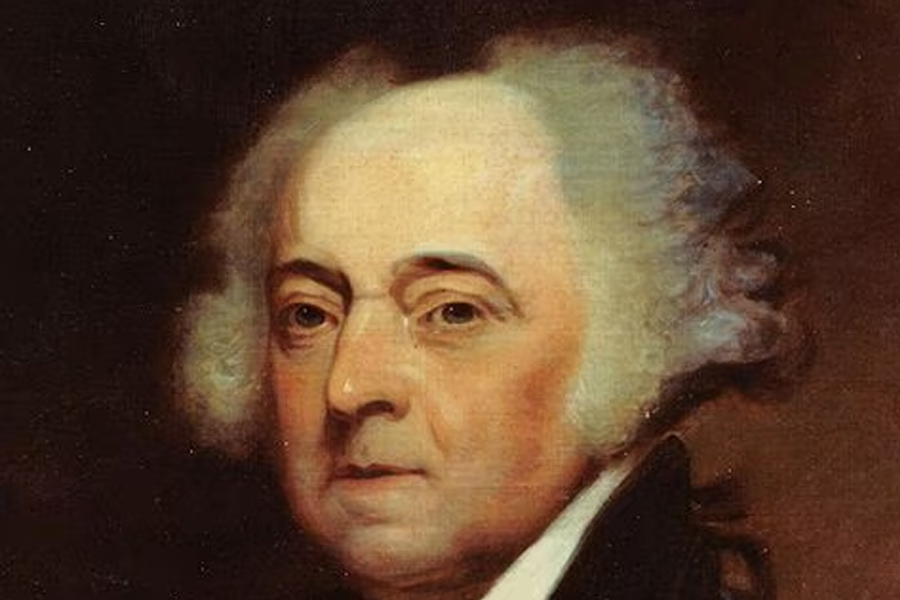
I see Joseph Harrod Adams as a man who lived in the shadow of one of America’s most famous families while pursuing a difficult road. He was born in Quincy, Massachusetts, to Thomas Boylston and Ann Harrod Adams on December 16, 1817. His grandfather, John Adams, was the second president of the United States, and his grandmother, Abigail Adams, was famous for her letters and political intelligence.
Joseph was raised without presidential prominence, yet the Adams name surrounded him. Home and family landscape, Quincy had properties, burial grounds, correspondence, ancient loyalties, and public service recollections. Family inheritance was a vast mansion with several rooms. Some joined politics, some the military, while some stayed home.
Thomas Boylston Adams, Joseph’s father, was born in 1772, the youngest son of John and Abigail Adams. He was a lawyer and judge. Mother Ann Harrod Adams was the daughter of Haverhill innkeepers. She kept family records and personal notes, including her children’s health and character.
Joseph grew up with several brothers and sisters:
| Family member | Dates | Description |
|---|---|---|
| Abigail Smith Adams Angier | 1806 to 1845 | Joseph’s older sister |
| Elizabeth Coombs Adams | About 1808 to 1903 | Lived a long life and never married |
| Thomas Boylston Adams Jr. | 1809 to 1837 | Served in the United States Army |
| Frances Foster Adams | 1811 to 1812 | Died in infancy |
| Isaac Hull Adams | 1813 to 1900 | Joseph’s older brother |
| John Quincy Adams | 1815 to 1854 | United States Navy officer |
| Joseph Harrod Adams | 1817 to 1853 | United States Navy lieutenant |
Joseph was only about fourteen or fifteen years old when his father died in 1832. His mother died in 1845, leaving the surviving children connected by both affection and shared responsibility. The early deaths of several family members gave the Adams household a solemn character. Service, illness, and loss were not distant ideas. They were woven into ordinary family life.
Entering the United States Navy
Joseph entered the United States Navy as a midshipman around 1831 or 1832. This was a demanding career choice for a young man. Naval officers spent long periods away from home, endured harsh climates, lived within strict hierarchies, and accepted the possibility of disease, shipwreck, and combat.
Midshipmen learned navigation, seamanship, gunnery, discipline, and onboard life at the bottom of the officer hierarchy. Experience, exams, suggestions, and service demands determined advancement. Joseph became a lieutenant in the 1850s.
His career unfolded as the US expanded commercially and diplomatically. Steam power transformed naval operations, yet sailing vessels were important. A ship may use wind and coal for different parts of a journey. Officers had to know both customs. Oceans were more than a way between ports. Moving logistics were the issue.
John Quincy Adams, Joseph’s brother, joined the Navy. The brothers continued a family legacy of public service, although their professions took them far from Quincy. John Quincy Adams was lost at sea from the USS Albany in 1854, months following Joseph’s death. Their stories are particularly terrible in family history.
The USS Powhatan and the Perry Expedition
Joseph’s final assignment brought him into one of the most important American naval missions of the nineteenth century. He served aboard the USS Powhatan during Commodore Matthew C. Perry’s expedition to Japan.
This voyage lasted from 1852 until 1854. It was meant to improve US-Japan relations, safeguard shipwrecked seamen, and open Japanese ports to American trade and shipping. Perry’s fleet was known by its thick steamer smoke, which Japanese onlookers called “black ships.”
Powerful sidewheel steam frigate Powhatan. Its engines offered it speed and wind independence, but steam power fed its coal addiction. It was necessary to load, store, guard, and ration coal. No ship could refuel while crossing the Pacific. Harbour calls mattered.
The expedition route reflected this. The squadron visited ports and staging areas in Madeira, St. Helena, Cape Town, Mauritius, Ceylon, Singapore, Hong Kong, Macao, and Shanghai. These places offered coal, water, food, repairs, information, and diplomatic contact.
The fleet also operated around the Ryukyu Islands and the Bonin Islands. Perry saw these areas as possible stepping stones for future American movement across the Pacific. The expedition’s ships carried provisions, coal, weapons, naval stores, gifts, scientific equipment, and personal belongings for hundreds of sailors and Marines. Supply vessels were as important as the larger warships. Without them, the expedition’s impressive appearance would have quickly become an empty shell.
In 1854, 1,600 expedition members returned to Japan. The mission required naval power and massive organization. Officers organised ship movements, landing parties, interpreters, surveys, rituals, and negotiations. Every display of authority has to be calibrated against inciting violence.
Joseph Harrod Adams Dies in China
Joseph died aboard the Powhatan while it was anchored in China. The most commonly given date is October 4, 1853, although some records identify October 1. He was thirty five years old.
The public tales of his death vary in cause. His death occurred after a protracted overseas assignment when sickness was a threat and medical treatment was scarce. Naval leaders and sailors endured unknown diseases, poor sanitation, intense heat, and months at sea.
The Macao Protestant Cemetery buried Joseph. He was buried with foreign sailors, businessmen, officials, and travellers who perished abroad. A major maritime city, Macao’s cemetery was the ultimate resting place for many people involved in the region’s growing international traffic.
In Quincy, a cenotaph or memorial at Mount Wollaston Cemetery keeps his name connected to the Adams family landscape. The memorial does not replace the grave in Macao. Instead, it creates a second point of remembrance, bringing a distant naval death back into the town where Joseph was born.
Family Relationships and Shared Loss
Joseph’s closest family connections included his siblings, particularly his naval brother John Quincy Adams and his brother Isaac Hull Adams. His sister Elizabeth Coombs Adams remained unmarried and lived until 1903, spanning nearly the entire nineteenth century after Joseph’s death.
In 1837, his older brother Thomas Boylston Adams Jr. died unmarried after serving in the Army. That meant land and sea military service for the family. Joseph died in China and John Quincy died at sea, creating a tragic pattern: two brothers joined the Navy and never returned to civilian life.
Joseph was linked to the Adams family, which includes Charles Francis Adams Sr. and George Washington Adams. These relatives were from President John Quincy Adams’ notable branch. Abigail Adams Smith, Susanna Adams, Elizabeth Adams, Susanna Boylston, Elizabeth Quincy Smith, John Adams Sr., and William Smith were also related.
The Adams family’s exceptionally strong culture of letters, journals, memorials, and family reminiscence made these interactions important. Even if a person left few personal papers, his name could be found in parents, siblings, cousins, and connected branch descendants’ records.
Personal Means and Private Life
Joseph appears to have lived as a professional naval officer rather than as an independent gentleman of great wealth. His family had status, property connections, and an important name, but that did not necessarily mean that every member possessed a large personal fortune.
Joseph’s commercial career, land accumulation, and financial empire are unknown. His naval commission and family support or property arrangements certainly determined his income and position.
Strongest public records show no marriage or children. An online link to Amanda Kidd and her 1831-born son Andrew N. Adams is unlikely and usually considered a mistake. Joseph was fourteen in 1831, making that family connection unlikely.
The absence of a documented marriage does not make his life empty. His career placed him in a world of ships, ports, officers, sailors, charts, diplomatic missions, and distant horizons. His story is one of service interrupted before middle age.
Frequently Asked Questions
Who was Joseph Harrod Adams?
Joseph Harrod Adams was a United States Navy lieutenant born in Quincy, Massachusetts, on December 16, 1817. He was a grandson of President John Adams and served aboard the USS Powhatan during Commodore Matthew C. Perry’s expedition to Japan.
Who were Joseph Harrod Adams’s parents?
His parents were Thomas Boylston Adams and Ann Harrod Adams. Thomas was a lawyer and judge and the son of John and Abigail Adams. Ann was the daughter of Haverhill innkeepers and preserved family observations and records.
Was Joseph Harrod Adams related to President John Adams?
Yes. Joseph was John Adams’s grandson through his father, Thomas Boylston Adams.
What was Joseph’s naval rank?
Joseph entered the Navy as a midshipman around 1831 or 1832 and later became a lieutenant.
What ship did Joseph Harrod Adams serve on?
He served on the USS Powhatan, a steam powered sidewheel frigate assigned to Commodore Matthew C. Perry’s expedition to Japan.
When did Joseph Harrod Adams die?
He died in China in October 1853, most often dated October 4, although some records give October 1. He was thirty five years old.
Where was Joseph Harrod Adams buried?
He was buried in the Protestant Cemetery in Macao. A cenotaph or memorial in Mount Wollaston Cemetery in Quincy also commemorates him.
Did Joseph Harrod Adams have a wife or children?
No confirmed wife or children are clearly documented. A proposed connection to Amanda Kidd and Andrew N. Adams is considered doubtful because of serious timeline problems.
Did Joseph’s siblings also serve in the military?
Yes. His brother Thomas Boylston Adams Jr. served in the United States Army, and his brother John Quincy Adams served in the Navy and was lost at sea from the USS Albany in 1854.